

Director Goce Dimovski in an interview with Kapital: The new approach to attracting foreign investment positions Macedonia as a leader in the region!
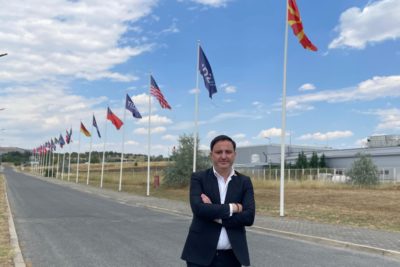
Director Dimovski, within the framework of the concept of promoting economic policies and supporting investments in technological and industrial development zones, in an interview with Kapital magazine, spoke about Macedonia’s new approach to attracting foreign direct investment, positioning the country as a regional leader. Dimovski noted that the volume of foreign investment in Macedonia increased by 17.4% in 2024, contrary to the general trend of decline in Eastern and Southeastern Europe. The interview also covered topics such as the diversification of Macedonia’s investment portfolio outside the automotive industry, including the military industry, as well as efforts for infrastructure improvements and overcoming workforce challenges through dual education.
According to the latest analysis of the Vienna Institute for International Economic Studies, the volume of foreign investment in Eastern and Southeastern Europe in 2024 was lower than in the past few years, except in several countries in the Western Balkans that registered an increase of 17.4%. Macedonia is a leader and a leader in attracting foreign investment. The latest analysis of the Vienna Institute for International Economic Studies is a notorious fact about the success of the structural changes we have made with the new model and approach to attracting foreign investment that start from great transparency and regular communication, emphasized Director Goce Dimovski.
Namely, we as a government are closely monitoring the situation with the automotive industry in Europe, which is why we are in constant contact with serious multinational companies that plan to close their capacities in Europe and invest in our region, with which we are in the negotiation phase with some, while some of them have already made internal decisions to invest in Macedonia, so that in the period that follows, according to the results of all these negotiations, all new potential investments in Macedonia will be announced.
According to the analyses that we do in the Directorate for TIDZ on a monthly basis, I can say that we have an increase in exports from TID zones by 4% for the period January 2025 – June 2025 compared to the period January 2024 – June 2024. We also have an increase in the number of employees in June 2025 compared to June 2024, i.e. the conclusion from the analyses is that all companies in TID zones have an increase compared to the same period last year.
Kapital: We have an Agreement for Strategic Cooperation with the Kingdom of Great Britain! The Agreement will undoubtedly, and is expected, have a positive impact on the economy of Macedonia! How would this Strategic Agreement have an impact on increasing foreign investments in industrial technological development zones?
Dimovski: Establishing a strategic partnership with a country such as Great Britain and how will it contribute to the development of Macedonia in many aspects. The impact of the Strategic Partnership Agreement, according to our expectations, would be multiple.
First of all, most of the credit will be used for capital projects in infrastructure. We all know how important quality infrastructure is for attracting new investments and developing the economy. At the same time, the fact that Macedonia is a strategic partner with Great Britain additionally influences Macedonia to be an even more attractive investment destination for multinational companies.
Kapital: What are the investment zones for special purposes that you have announced on several occasions? What type of investments and purposes are they? Do you have specific plans and locations where they will be developed? For which industries?
Dimovski: As a government, we are focused on attracting quality foreign direct investments that in themselves would have high-tech production, which, in turn, will create high-paying jobs and additionally increase exports.
At the same time, our goal is to diversify investments due to the fact that 75% of the existing companies in the TID zones are from the automotive industry. We as a government are focused on diversifying the investment portfolio. When I say diversification, it refers to production intended for the military industry, and other special-purpose production.
The initial plans are for certain TID zones that are not operational, and based on the interest of new potential investors, within the framework of positive legal regulations to be industrial zones or parks for special-purpose production.
Kapital: Times are changing. AI (Artificial Intelligence) and digitalization are taking up more and more space in what means production, greater productivity and industrial development… How much, perhaps, is now needed to change the approach and Strategy towards attracting this type of investment?
Dimovski: One of the first things that this government has committed to in terms of attracting foreign investment is to make the necessary adjustments to the global trends that are current in terms of attracting foreign investment, all with the aim of creating an investment environment that will be attractive, competitive and sustainable in the long term.
Namely, an example of this government’s serious approach in terms of attracting foreign investment is the fact that the multinational company LEAR, which is already present in the TID zones, in February 2025, outside the zones, more precisely in Skopje, opened a Materials Planning and Logistics Center, which is a materials planning and logistics center for LEAR factories in Europe. This is an investment in the field of service activities, which will employ more than 200 highly educated people from Macedonia, and which represents the first such foreign investment in this area in the history of independent Macedonia.
Kapital: Is there enough labor for the factories in the TIDZs? When we ask about the labor force, the dilemma arises here: do we have a sufficiently trained and educated labor force?
Dimovski: The labor shortage is something that represents a serious challenge for all countries in the region.
According to the communication that I have regularly with the companies in the TID zones, the conclusion is that some companies need highly qualified personnel, some companies need low-qualified personnel. In the context of the labor force, I must emphasize the effect of dual education, which helps in dealing with this challenge, and this is also confirmed by the Economic Chamber of Macedonia, with which this Government plans to formalize dual education in the secondary education system in Macedonia with a new law.
My goal in this mandate is for the TIDZ Directorate to be an exemplary institution, an institution in which everyone who is part of the TIDZ Directorate will be proud to be part of such an institution. What I can promise is that as long as I am at the head of the TIDZ Directorate, I will give my maximum, all with one goal, and that is to have as many quality foreign investments as possible that will contribute to Macedonia being one of the countries in Europe with the highest economic growth.
According to the analysis made for one year of my mandate, I can say that for the period from July 2024 to June 2025, we realized investments worth more than 190 million euros in the TID zones, which will create 2,000 new jobs.
Additionally, four new investments have been agreed in the TID zones with a value of more than 90 million euros, which will create 900 new jobs and which will significantly increase exports from Macedonia.
Also, four multinational companies have already made an internal decision to invest in Macedonia, specifically in the TID zones, with the total value of these investments expected to be over 150 million euros with 1300 new jobs. All this speaks of the success we have achieved in just one year of mandate with the new approach to attracting foreign investments, taking into account the fact in which state we inherited the country and the overall economy at the beginning of this mandate.
Kapital: What other infrastructure is missing in the zones? What else needs to be done so that the zones provide maximum services to investors? What should the TIDZ do, and what should the Government (state) do?
Dimovski: One of the main challenges I faced from the first day I was appointed to head the TIDZ Directorate was solving all the accumulated problems in the Directorate, including the infrastructure problems that investors were facing.
Based on a new progressive and open approach with all users in the TID zones, we are solving their problems step by step in accordance with the positive legal regulations in the country.
Proof of the success of this new approach is the fact that according to the survey of all users for satisfaction with the services of the Directorate for TIDZ for 2024, the average score is 4.48 out of a maximum of 5, which represents the highest average score of all users for satisfaction with the services of the Directorate for TIDZ in the history of the existence of the Directorate for TIDZ.
At the same time, according to the analysis conducted for all TID zones, for the most part each zone has the necessary appropriate infrastructure. Here I must emphasize the fact that I inherited many infrastructure facilities in the TID zones that were built in the past, and are still without approval for use, primarily due to unresolved property and legal relations, i.e. the conclusion is that the project management for the implementation of these capital infrastructure projects was not at the appropriate level.
In terms of investments in infrastructure, I can say that in just one year, as the Directorate for TIDZ, we have managed to resolve all the accumulated shortcomings in the past, which has allowed us to complete the construction of the Overpass connecting TIDZ Skopje 1 and TIDZ Skopje 2, and we have completed the construction of the Administrative Buildings in TIDZ Prilep, TIDZ Struga and TIDZ Kicevo. The administrative buildings in TIDZ Prilep and TIDZ Struga have received approval for use in accordance with the positive legal regulations, while for the Overpass and the Administrative Building in TIDZ Kicevo we are in the process of obtaining approval for use in accordance with the positive legal regulations. After that, we expect to put them into use (for these facilities we only have an internal technical inspection by the supervisory authority). The total value of these investments has reached 8 million euros.
Based on the active and transparent communication we have with the companies in the TID zones and in accordance with the needs, we have a plan for the implementation of new investments in infrastructure, all with the aim of providing quality conditions for all existing and new potential investors.
Kapital: Can Macedonia develop specific zones for high technology, IT and engineering, with research centers in which zones would engage engineers and high-profile professionals not only from Macedonia but also from the region and the world?
Dimovski: According to the latest decision of the Government, a decision was made to build a multifunctional science and technology park at the University of “Sts. Cyril and Methodius”. A kind of “Silicon Valley” will represent a national center for innovation, knowledge and new technologies, which will aim to attract domestic and foreign companies – investors. The park will represent a catalyst for economic growth, cooperation between science and business, and regional development.
The plan is for the park to have modern electrical and telecommunications infrastructure, as well as flexible and functional workspaces, tailored to the needs of innovators, researchers, students and entrepreneurs.
This technology park is expected to become a center for the transfer and commercialization of knowledge in the field of high technology IT and engineering, as well as a key tool for retaining young talents and supporting the entrepreneurial spirit in the country.
Kapital: The automotive industry in Europe is in a major crisis. The German automotive industry is having a bad day!? How will this affect the investments in Macedonia of the automotive companies that are currently here? What is your analysis of the crisis? In what direction will it develop and what will be the epilogue? How can Macedonia turn this European crisis to its advantage?
Dimovski: The fact is that the automotive industry is exposed to great pressures and numerous challenges. The direction in which things will move in the automotive industry in Europe will primarily depend on the ability and agility of large vehicle manufacturers in adapting to the changes dictated by the industry, which will either accelerate or slow down the recovery, i.e. affect the competitiveness and future of the automotive industry in Europe. This will determine the volume of production or work of companies in the TID zones.
According to the analyses that we do in the Directorate for TIDZ on a monthly basis, I can say that we have an increase in exports from the TID zones by 4% for the period January 2025 – June 2025 compared to the period January 2024 – June 2024. We also have an increase in the number of employees in the month of June 2025 compared to the month of June 2024, i.e. the conclusion from the analyses is that all companies in the TID zones have an increase compared to the same period last year.
Namely, we as a government are closely monitoring the situation with the automotive industry in Europe, which is why we are in constant contact with serious multinational companies that plan to close their capacities in Europe and invest in our region, with some of which we are in the negotiation phase, while some of them have already made internal decisions to invest in Macedonia, so that in the period that follows, according to the results of all these negotiations, all new potential investments in Macedonia will be announced.
Kapital: What is the current interest in foreign investment in Macedonia? And what needs to be changed for the interest to be even greater… possibly in the state aid system?
Dimovski: The fact is that we ended 2024 with the highest record level of foreign direct investment in Macedonia, which amounted to a record 1,255 million euros (1.25 billion euros), so that the pace and dynamics that have already been established in practice as of July 2024 in terms of attracting investments will continue with stronger dynamics in the coming period.
According to the communication with potential investors so far, the conclusion is that the companies have quite serious investment plans, and proof of this is all those realized and agreed investments in 2025.
Our commitment and commitment is to attract as many new quality foreign investments as possible in the coming period that will create greater added value in the Macedonian economy, i.e. the goal is to attract quality foreign investments that will have high-tech production and that will be export-oriented.
In terms of what needs to change, as I mentioned earlier, this Government aims to align with the global trends that are current in the area of attracting foreign investments, all with one goal, and that is, to create an investment environment that will be attractive, competitive and sustainable in the long term. Proof of this is the new approach that we have towards every existing and new potential investment.
In terms of state aid, I must point out here that the approach has changed, whereby the amount of state aid primarily depends on the business plan of each investment, i.e. first the effect that that investment will have on the Macedonian economy is analyzed and determined, and then a state aid package is offered in accordance with the positive legal regulations.
Capital investments realized in the first year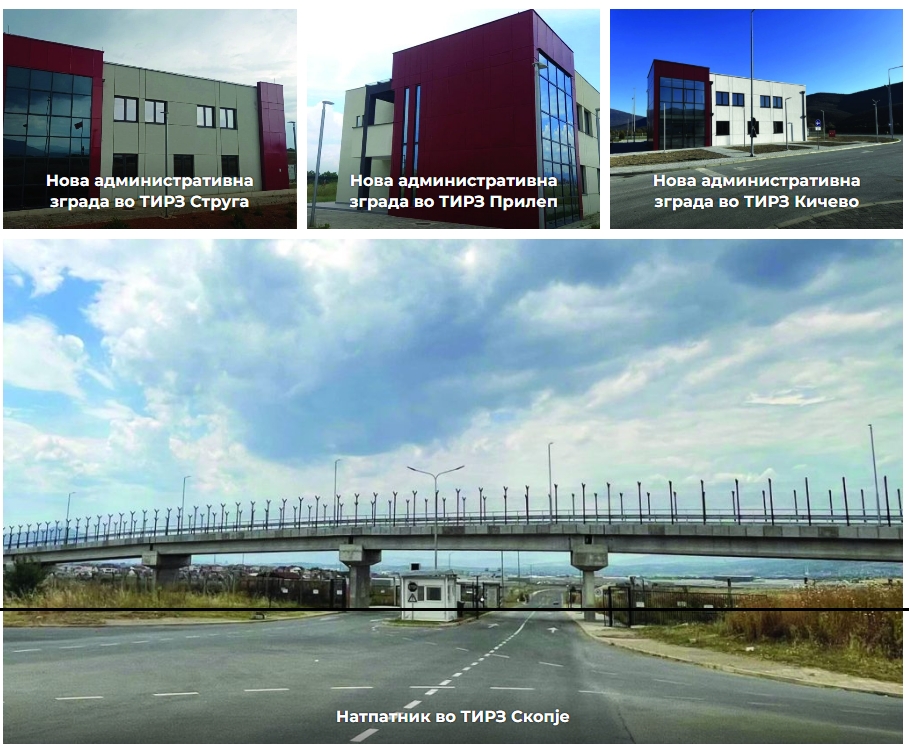
Kapital: In what condition did you inherit the Directorate for TIDZ and where do you see the Directorate for TIDZ during and at the end of your mandate as director of this institution?
Dimovski: To be honest, I did not expect that I would inherit the Directorate for TIDZ in such a bad condition, a condition where I inherited many harmful contracts with various legal entities, I inherited built infrastructure facilities for which we still have unresolved property and legal relations, and they are still without approval for use. I inherited a TID zone that had no water, and there were companies that were operating in that TID zone. I inherited a bunch of systemic problems and neglected processes, in a word, I inherited an institution that needs to be built from the ground up.
Given the fact that a year has passed since my appointment to head the Directorate for TIDZ, I can say that a large part of those accumulated and inherited problems, together with the employees of the Directorate for TIDZ, are successfully resolving in accordance with positive legal regulations. Proof of this is that the Directorate for TIDZ has made a strong leap in integrity, i.e. it ranked 15th out of a total of 50 institutions and is recognized among the best institutions in the fight against corruption according to the report of the State Commission for the Prevention of Corruption on the Integrity System, which represents a strategic mechanism for the prevention of corruption and the promotion of transparency. Namely, the achieved result for 2024 of the Directorate for TIDZ represents a significant increase by one level, from an “average” level to a “good” level, compared to 2023, when the percentage of fulfillment was 39.2%, while for 2024 it was 61.1%.
According to the analysis made for one year of my mandate, I can say that for the period from July 2024 to June 2025, we have realized investments worth more than 190 million euros in the TID zones, which will create 2,000 new jobs.
Additionally, four new investments in the TID zones worth more than 90 million euros have been agreed, which will create 900 new jobs and significantly increase exports from Macedonia.
Also, four multinational companies have already made an internal decision to invest in Macedonia, specifically in the TID zones, so the total value of these investments is expected to be over 150 million euros with 1,300 new jobs. All this speaks of the success we have achieved in just one year of mandate with the new approach to attracting foreign investments, taking into account the fact in which state we inherited the country and the overall economy at the beginning of this mandate.
My goal in this mandate is for the Directorate for TIDZ to be an exemplary institution, an institution in which everyone who is part of the Directorate for TIDZ will be proud to be part of such an institution. What I can promise is that as long as I am at the head of the Directorate for TIDZ, I will give my maximum, all with one goal, and that is to have as many quality foreign investments as possible that will contribute to Macedonia being one of the countries in Europe with the highest economic growth.
To read the full interview, click here.